

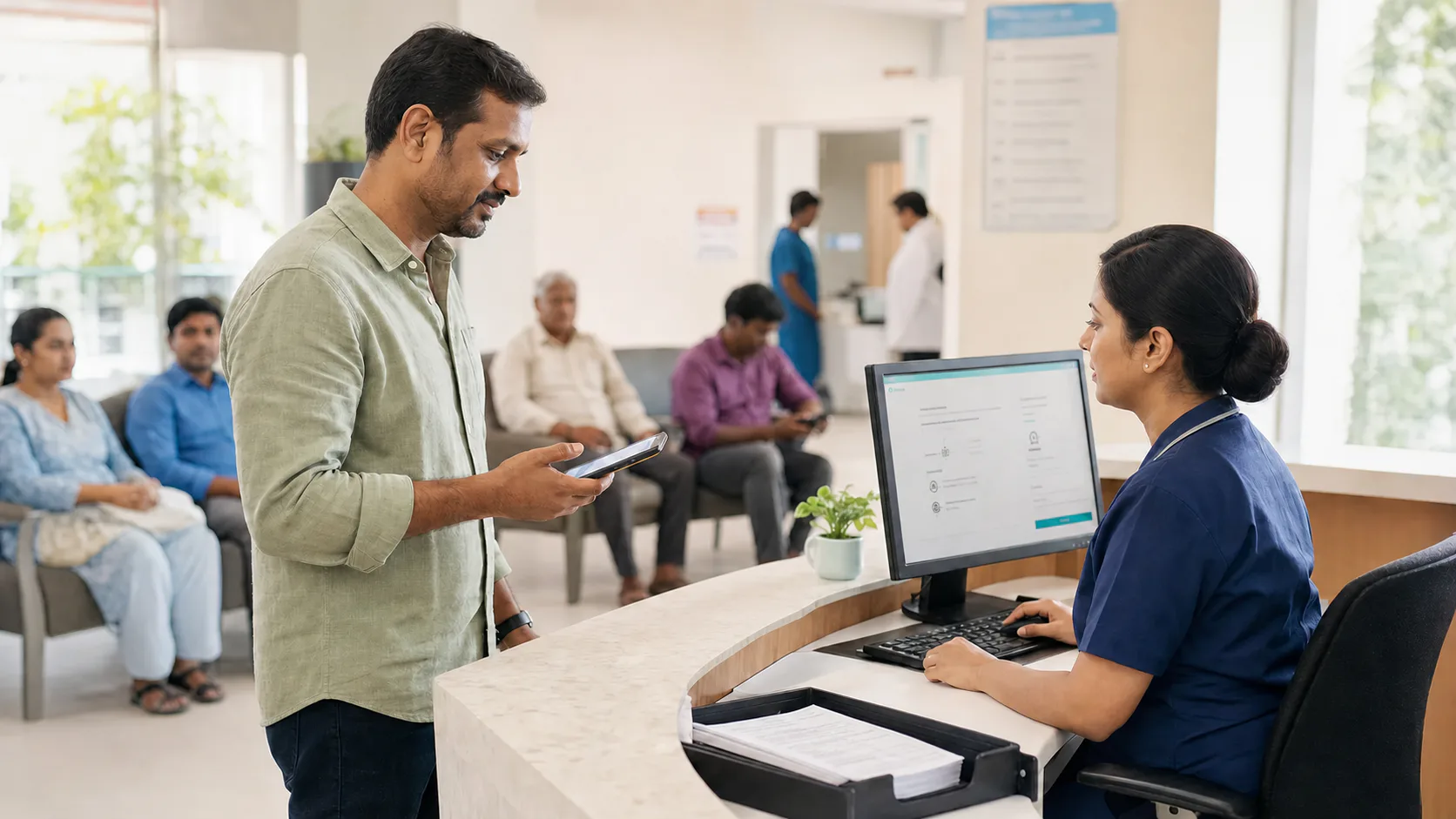
ABDM integration is not a single button or API. It is a set of identity, discovery, consent and health-information exchange workflows that connect a hospital's digital systems to India's wider digital health ecosystem.
The outcome hospitals are working toward
The Ayushman Bharat Digital Mission is intended to support an open, interoperable and standards-based digital health ecosystem. For hospitals, that means enabling approved workflows around ABHA, linked records and consent-based exchange without losing control of internal clinical operations.
The practical goal is continuity: the right information can move with the individual when consent and system rules allow it, while the hospital continues to operate its EMR, laboratory and care processes.
Core concepts your implementation team should align on
ABHA provides an identifier within the digital health ecosystem. Health Information Providers make eligible records available through authorised flows, while Health Information Users request information for permitted purposes. Consent management governs the exchange.
- ABHA creation and verification journeys
- Patient discovery and care-context linking
- Consent requests with a clear purpose and time period
- FHIR-aligned health information exchange
- Audit, exception and revocation handling
A phased hospital rollout
Begin by mapping the patient journey and the systems that create records. Identify where staff already capture demographics, visits, prescriptions, diagnostics and discharge information. This reveals where ABDM steps can be embedded with the least friction.
- Phase 1: governance, system inventory and sandbox readiness
- Phase 2: ABHA-enabled registration and verification
- Phase 3: record linking and HIP workflows
- Phase 4: consent-based HIU workflows and operational monitoring
Why shared context helps
Integration becomes fragile when each department builds its own connector and exception logic. A shared data and context layer can make consent states, data mapping and system events more consistent across EMR, PHR, diagnostics and engagement workflows.
Doxyte is being designed to support this coordination. It helps hospitals connect existing systems to interoperable workflows while keeping implementation details visible to clinical and technical owners.
Quick answers
Frequently asked questions
What is ABDM integration for a hospital?+
It is the technical and operational work required to connect hospital systems with ABDM workflows such as ABHA, consent management and standards-based health-information exchange.
What is the difference between HIP and HIU?+
A Health Information Provider makes eligible health information available through authorised workflows. A Health Information User requests authorised information for a defined purpose.
Should a hospital start in the ABDM sandbox?+
Yes. The sandbox is the appropriate environment for validating workflows and integrations before production onboarding.