

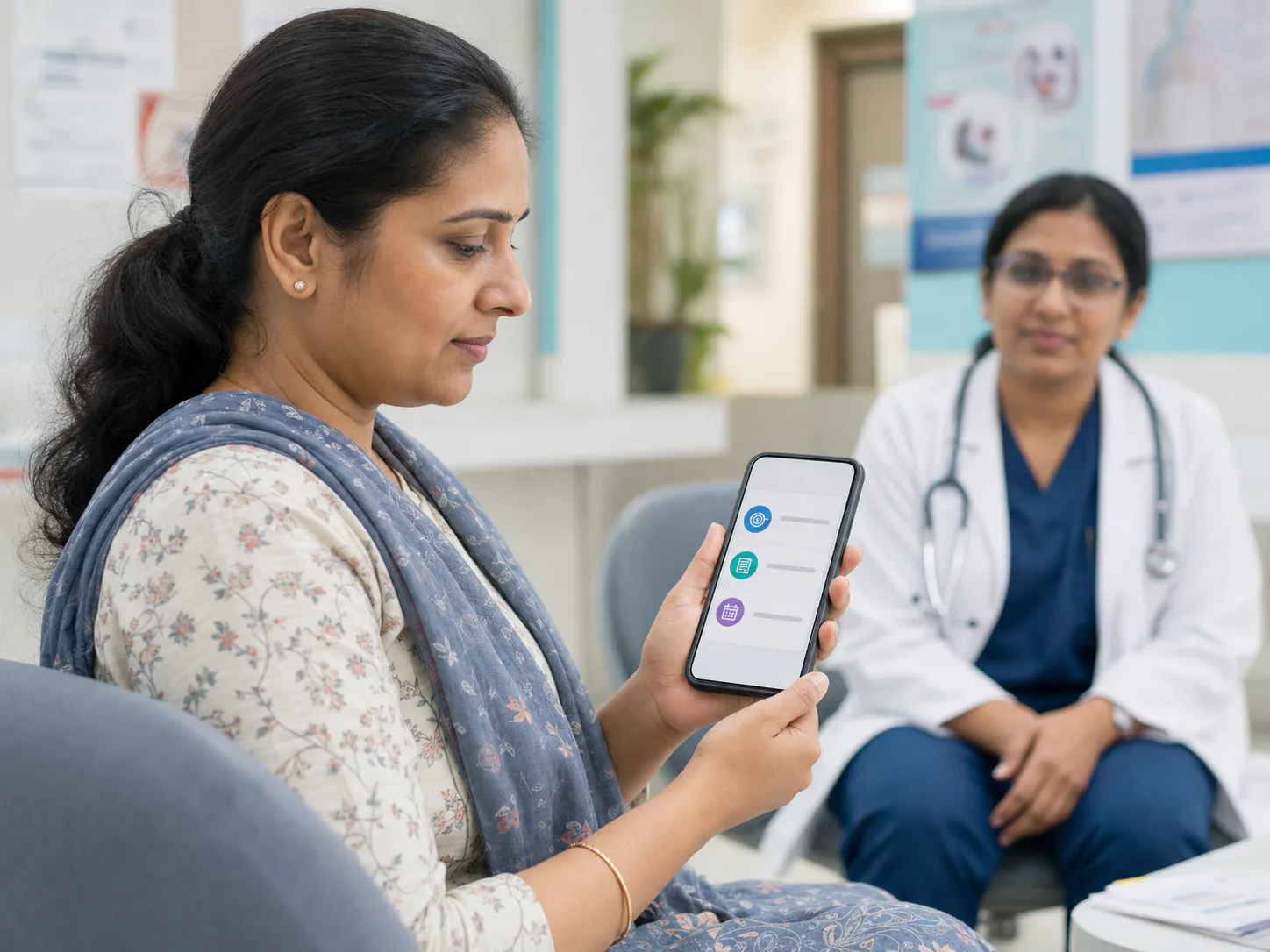
ABHA and a personal health record are related, but they are not the same thing. ABHA can help identify a person in India’s digital-health ecosystem, while a personal health record helps that person view, organise and control eligible health information. Before sharing anything, check who is asking, which records they need, why they need them and for how long.
ABHA, ABHA Address and PHR in plain language
An Ayushman Bharat Health Account, or ABHA, is a 14-digit identifier used within the Ayushman Bharat Digital Mission ecosystem. An ABHA Address is an easy-to-remember address used for digital health information exchange. A personal health record, or PHR, is an electronic record controlled by the individual that can bring information from different encounters into a longitudinal view.
A hospital EMR usually contains records created by that organisation. A PHR can help the individual assemble information from more than one source, subject to the participating systems and the person's choices. It does not replace the source record maintained by a healthcare provider.
Start with the records you already need to manage
For a person in Chennai, a useful first step is not to try to digitise every paper immediately. Gather the records that are most likely to matter at the next appointment: a recent prescription, laboratory reports, imaging summaries, discharge documents, allergy information and a short list of current medicines. Keep the original files where a clinician may need to inspect the full document or image.
An ABHA number can be created through the official portal or app, or with assistance at a participating healthcare facility. That does not mean every clinic, hospital or laboratory you use is connected, that every historic document will appear automatically, or that an ABHA replaces the facility's own registration process. Ask the provider what it can link or receive in the workflow you are about to use.
- Keep a dated folder of the original reports and prescriptions you may need to show
- Check that your phone number and profile details are current before a planned digital-health step
- At registration, ask whether the facility supports the specific ABHA or record-sharing action you want
- Do not delay urgent care while trying to find, link or share a digital record
What consent-based sharing is designed to do
ABDM documentation describes consent as granular and purpose-based. A request should tell the person who wants the information, what type of information is requested, why it is needed and the relevant time period. The individual can approve or deny the request and can revoke consent according to the supported process.
Consent to one request should not be treated as permission for every future use. Before approving, check the requesting organisation, the record categories, the date range and the stated purpose. If any part is unclear, ask the provider to explain it.
A typical record-sharing journey
The exact screens vary by application, but the underlying journey should remain understandable. The person identifies or links eligible care contexts, receives a consent request, reviews its scope and then makes a choice. The authorised information is transferred through the supported digital health workflow.
- Confirm the healthcare facility or professional making the request
- Read the purpose, data categories and date range
- Approve only the scope you understand
- Review active permissions and revoke access when appropriate
- Keep the original reports when source detail may still be needed
Use a consent request as a decision point, not a routine pop-up
When a Chennai hospital, clinic or laboratory asks to access records, pause long enough to read the request. A meaningful request should make the recipient, purpose, record categories and duration understandable. If you are attending a specialist for the first time, sharing a carefully chosen report may be more useful than treating the request as an automatic transfer of every item you have ever stored.
Consent can be withdrawn through the supported process. If you are unsure what a provider has received or needs for your appointment, ask its records or care team for an explanation. For a clinical concern, ask a qualified clinician rather than relying on a PHR view alone.
What ABHA does not mean
Creating an ABHA does not by itself provide a diagnosis, guarantee free treatment or make every medical record available automatically. Records need to be created by participating providers and linked through supported workflows. Coverage under a health scheme and identity within the digital health ecosystem are separate questions.
A PHR summary can help organise information, but it should not be used as an emergency diagnosis tool. Seek qualified medical care for symptoms or treatment decisions and use emergency services when the situation may be urgent.
How Doxyte approaches personal health context
Doxyte PHR is designed to help people organise records, understand the source of extracted information and build a reviewable timeline. Nalan Health Journal adds voluntary observations such as symptoms, routines and questions between appointments. Where ABDM-connected workflows are applicable and available, consent and user control should remain visible throughout the journey.
Product scope and integration status are confirmed during evaluation. Doxyte does not diagnose conditions through the PHR or replace the care of a qualified professional.
Quick answers
Frequently asked questions
Is ABHA the same as a personal health record?+
No. ABHA is an identifier in the ABDM ecosystem. A PHR is an electronic record controlled by the individual that can help link, view and share eligible health information.
Can a hospital see all my records once I share my ABHA?+
Sharing an identifier is not the same as granting unlimited access. Health information exchange should follow a specific consent request with a purpose, data scope and time period.
Can I revoke consent for health-record sharing?+
ABDM describes consent as revocable. Use the supported consent-management process in the relevant application and contact the provider if you need help understanding an active permission.
Can I create an ABHA if I live in Chennai?+
Yes. The National Health Authority says an ABHA can be created through self-registration on the official portal or app, or through assisted registration at a participating facility. Creating an ABHA does not mean every Chennai provider or past record is already connected; ask the particular provider about its supported workflow.
Why are some reports missing from my ABHA or PHR?+
A record must be generated, available and linked through a supported workflow before it can appear. Provider participation, record type, source-system setup and your consent choices can affect what is available. Keep original reports and ask the provider for help with a record that is important for your care.
Does ABHA provide free healthcare?+
ABHA is a digital health account identifier. Eligibility for a public or private health benefit is determined separately by the rules of that scheme or policy.