Clinical documentation should preserve the reasoning behind care without pulling attention away from the patient. An AI medical scribe can help by converting the consultation into a draft note, but the quality of the outcome depends on workflow design, review controls and how well the system fits the clinical environment.
What an AI medical scribe actually does
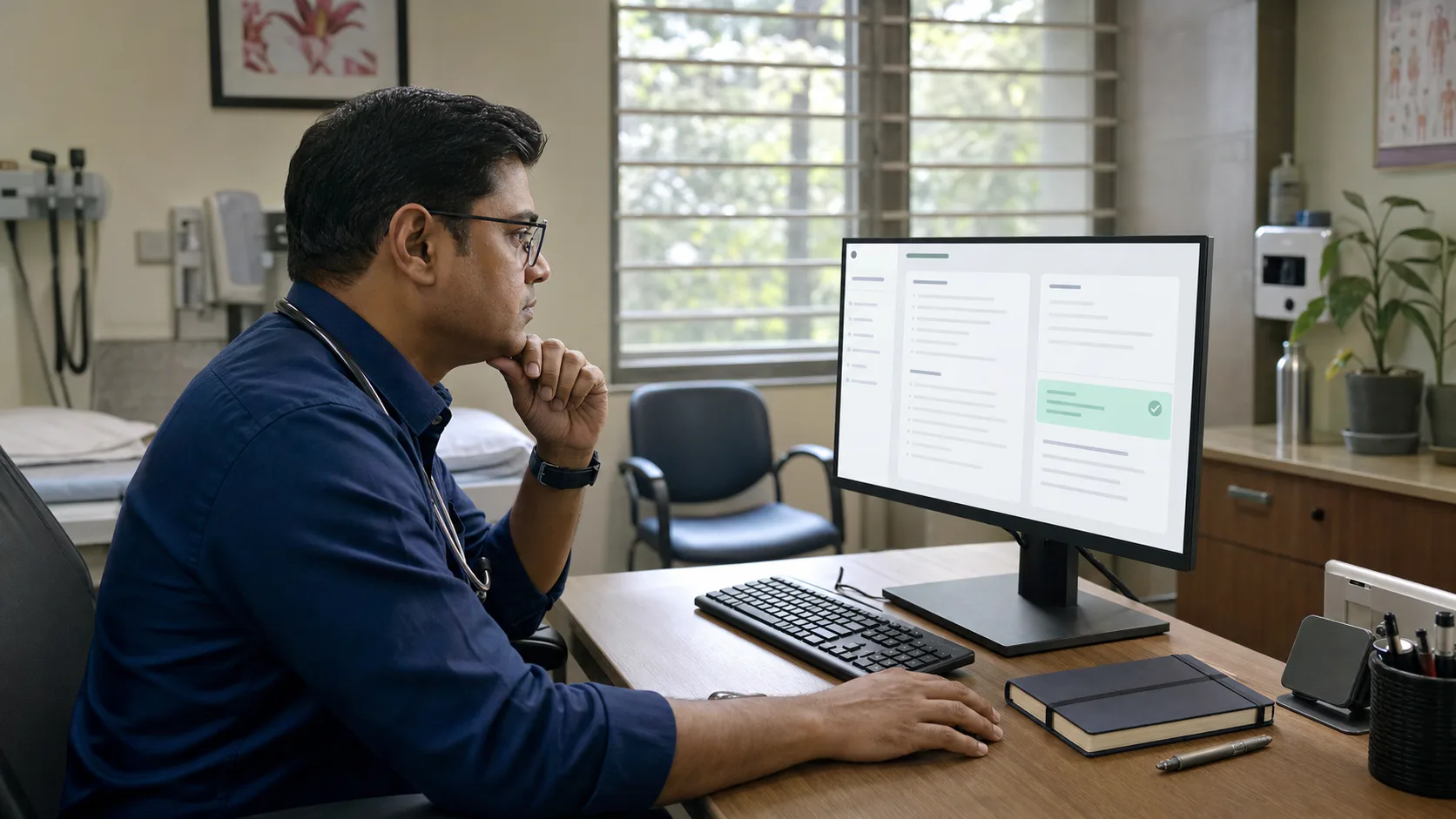
An AI medical scribe listens to an authorised consultation, identifies clinically relevant information and prepares a structured draft. Depending on the implementation, that draft may include history, findings, assessment, plan and follow-up instructions.
The important word is draft. A responsible clinical workflow should make the clinician the final reviewer and show clearly what is ready, what is uncertain and what still needs attention.
Where the time saving comes from
The largest gains usually come from reducing duplicate work: remembering details after the visit, retyping information into fixed templates and finishing notes after clinic hours. The best implementation follows the clinician's existing sequence instead of adding a separate recording-and-copying ritual.
- Capture the narrative during the consultation
- Map information into the correct section of the note
- Let the clinician review exceptions instead of rewriting everything
- Move approved information into the connected EMR workflow
Five questions to ask before choosing a scribe
A polished demo is not enough. Evaluate the tool against real consultations, representative specialties and the operational conditions of your facility.
- Can clinicians edit and approve every note before it is saved?
- How does the system handle multilingual or mixed-language consultations?
- What happens when the audio is incomplete or a clinical term is uncertain?
- Can the output match existing templates and specialty workflows?
- How are consent, access and retention handled?
A safer implementation pattern
Start with a contained workflow and a small clinical group. Compare draft completeness, correction patterns and time spent per note. Use those findings to tune templates and escalation rules before expanding.
Doxyte Scribe is designed around that review-first posture: authorised capture, structured drafting and explicit clinician approval within a connected documentation workflow.
Quick answers
Frequently asked questions
Does an AI medical scribe replace a doctor?+
No. It supports documentation. Clinical decisions, validation and sign-off remain with qualified healthcare professionals.
Can an AI scribe work with an existing EMR?+
It can when the implementation supports the EMR's templates, data fields and integration method. Workflow fit should be validated before rollout.
What should hospitals measure in a pilot?+
Measure note turnaround time, correction patterns, clinician satisfaction, workflow interruptions and the percentage of drafts approved without major restructuring.